
Interview
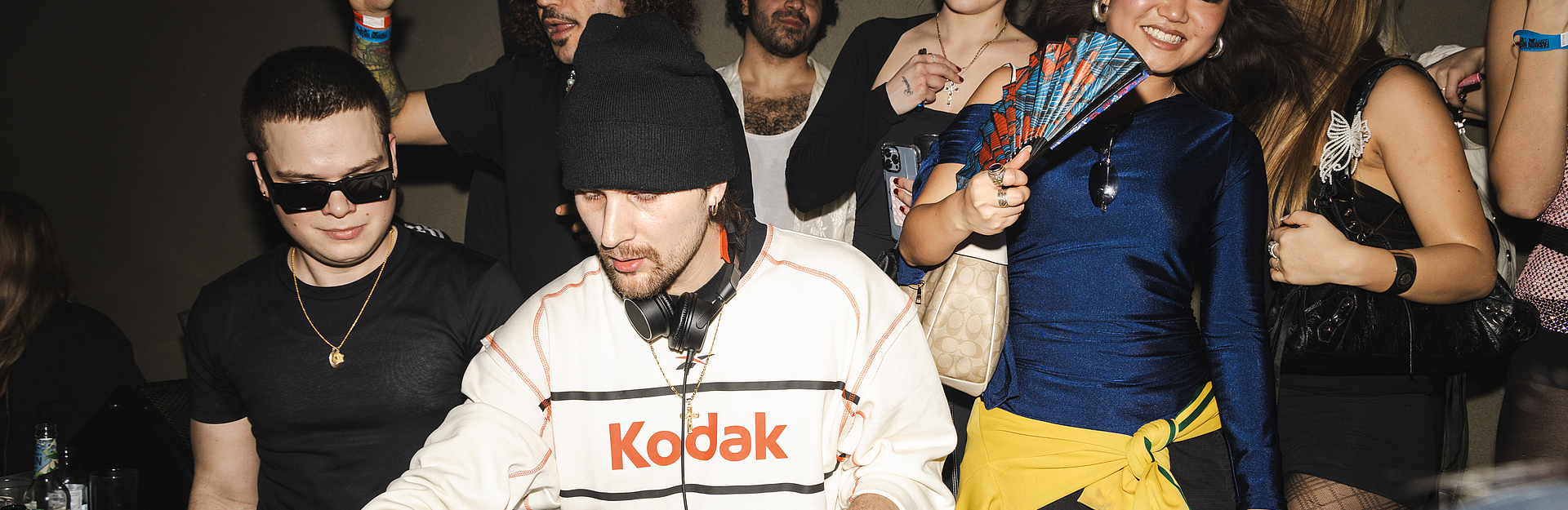
With Berlin Fashion Week SS27 coming up – and with that another deadHYPE opening party – we sat down with Bernard Koomson and Johannes Dreier, the duo behind the collective, to talk about Berlin, its community, and what it means to build something with cultural weight in a city that never stops moving. From parties to panels to print magazines, deadHYPE has created its own ecosystem – one that is built through offline experiences, where people gather, connect, and create something lasting together.
Bernard, Johannes, deadHYPE has built a strong reputation around community. How do you define community in a creative context today?
Johannes: It’s simple: Like-minded people coming together, sharing the same interest in style, fashion, and music.
Bernard: With the internet, a lot of subcultures have become harder to find because everything is so broad and accessible. That’s why it feels important to create judgment-free spaces again – spaces where people can experiment, try different things, and express themselves freely. For us, nothing is more important than the people that are attending. That’s really what community means to us.
In a city like Berlin, what does it take to turn community into something substantial rather than purely symbolic?
Johannes: Berlin is a pretty big city and there's always a lot going on. And because it's so huge, people lack connection, they sometimes don't know where to get to know people. That's something we try to cater to with everything we do. A lot of people claim community, but I feel like we have actually managed to build one: we host a lot of workshops, events, parties, creating space for everyone to build connections, friendships, and inspire each other to work on their own kind of creative projects.
Berlin is often described as a creative capital, but not always as a fashion capital. How do you see the city’s role within the wider fashion landscape?
Bernard: Berlin might not be seen as a fashion capital, but Berlin is a fashion city. It's so effortless and it's so real, so organic. When I go to London, I see people trying really hard to dress like they're from Berlin, you know, dressed in Balenciaga and New Rocks, trying to translate that punky feeling here. Whereas in Berlin, people are so effortless that they don't think about it so much to even need to call it a fashion city, it's just in the DNA of Berlin.
Johannes: I think people really have the freedom to express themselves in Berlin, whereas in other cities, they would be more judged for the way they dress. I see a lot of young people, coming from small villages in Germany, and when they arrive here, you can see it on their IG timeline: as time progresses, so does their style. I think Berlin enables the people to truly express themselves and dress how they want to dress. And I think that's cool.
In the years that have passed since deadHYPE came to Berlin 2019, how do you think the fashion landscape has developed here?
Bernard: For a long time, no one really took Berlin Fashion Week seriously. There needed to be a moment where people started treating it with the same importance as Paris or Milan. In that sense, Fashion Council Germany has been instrumental. They made a big step by bringing in cultural programming, putting money behind it, and working with the government to position Berlin, its designers, and its art as something that can compete with other fashion capitals.
Johannes: I want to add that we definitely see the relevance rising constantly. We've been doing the opening party twice a year now for the past four or five years and we've seen a rising demand in the people wanting to come to our events, the crowd is becoming more international too.
Bernard: There are so many cultures coming together here, and they've been able to bring their own kind of identity to Berlin specifically. And I think that multiculturalism is helping to bring in new ways of thinking.
Your recent Academy format addressed topics such as building a sustainable career, power dynamics when working with clients or brands and how to turn taste into capital. Why was it important to create a space for these conversations?
Johannes: deadHYPE is more than another random party collective, we're a functioning business working with many clients across the board. We work with sponsors like Reebok who enable us to host the kind of events at the scale that we do. And this comes with a lot of backlog, so you have to learn about taxes and setting up a business. So we want to share this knowledge with our community, that’s why we're hosting the academy, the workshops, to show people who want to build something, how they can do it and supply them with the tools.
For the upcoming BFW opening party you aim to bring fashion and community together in one space yet again. What can guests expect?
Bernard: Last year we did the BFW opening party with Reebok and it was really nice to work with a sports brand that has this tie in legacy and culture, so we’re excited to work with them again this time – just in time for the World Cup, which is an amazing moment to work with a sports brand to be able to bounce off fashion and football and make a little bit more playful and fun.
Johannes: We also try to take this very serious note that sometimes comes with fashion weeks out of it. We want to host actual fun parties. At our events people are actually dancing nonstop for hours and really enjoying their time and not just standing around trying to make the outfits look good and look all serious.
Why do gatherings like this matter at a time when major parts of the industry went all digital?
Bernard: We're an offline community, at the end of the day, it's about the experience. It's about coming to the moment and having somewhere where you can find your tribe, your group, your community. And for us, that outlives anything digital. Digital is just the second layer.
Johannes: We also feel like too much is happening online and we are always trying to work against it. We released our biannual hardcover print magazine a few years back. For us, this is a labour of love, because we want to create something that lasts, something that doesn't disappear in the endless scroll.
Bernard, you have many years of experience in strategy and influencer marketing, as well consulting in the music industry. Can a party be a strategic move?
Bernard: Are you going to expose how corporate we are? (laughs) Of course, there is a level of strategy to it, we build on a formula. We take it seriously. It's our work. We have such a big group of people involved in it, that it has to be strategic so that nobody's wasting their time and everybody has a clear purpose and vision.
Interview: Sinah Griessler



